A First Road Bike Over 100 kg — Will Carbon Hold Up, and What to Actually Check
Manufacturer weight limits are real engineering specs, not liability disclaimers. What matters more than frame material at higher rider weight.
Spring Fatigue and Cycling Training — Why Power Dips Despite a Good Plan
Spring fatigue is a real physiological effect — circadian shift, post-winter vitamin D deficit, and pressure swings, easily mistaken for overtraining.
Buying a Used Bike — What to Check Step by Step So You Don't Buy a Problem
A used bike can be a great deal or an expensive mistake. The most costly faults rarely show in listing photos — here's what to inspect in person.
Sun and Vitamin D in Spring — the Real Effect on Performance, Not Just Mood
Vitamin D regulates muscle contractile function and immune response, and most people end winter deficient. What that means for a cyclist's training.
Winter Dehydration — Why Cyclists Lose Water Even Without Sweating
In summer sweat is visible, so you drink. In winter that cue disappears while fluid loss keeps happening — through breathing, cold diuresis, and hidden sweat.
Outdoor Riding vs. the Trainer in Winter — Which Gives a Better Training Effect
Below roughly -5°C feels-like temperature, outdoor safety and training quality drop faster than the benefit of riding outside. When the trainer actually wins.
 Everyday riding
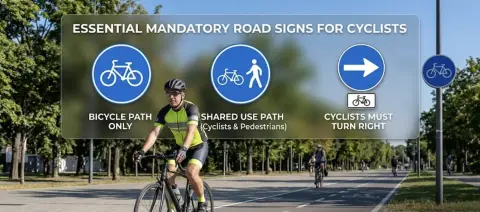
Mandatory Road Signs for Cyclists — Which Ones You Must Know
Overview of mandatory signs for cyclists: bike lanes, shared paths, contraflow lanes. What they mean and when they apply.
 Data & metrics
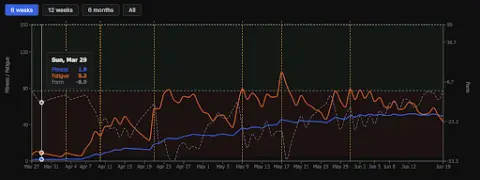
PMC chart — how to read it and manage your form
How to read the Performance Management Chart: Fitness (CTL), Fatigue (ATL), Form (TSB) explained with practical examples for training planning and tapering.
 Data & metrics
How to Prepare for a Ramp Test — the 24 Hours Before Your FTP Test
Fresh legs, cooling, cadence, caffeine and headspace. A complete ramp test preparation plan so your result shows real fitness, not fatigue.
 Data & metrics
How to Analyze a Ride File? 5 Things You Must Look At
FIT file analysis in 5 steps: interval execution, NP and IF, time in zones, heart rate vs power divergence and new power records.
 Training
What is TSS — Training Stress Score explained
How training load is calculated, what NP, IF and VI mean, and how much TSS is actually a lot.
 Nutrition & hydration
How many calories does cycling burn? Tables and calculator
How many calories you burn cycling depending on pace, weight and duration. Calorie tables and tips to increase energy expenditure.