 Health & recovery
Overtraining on the Bike — Symptoms and Prevention
More training means better results, up to a point. Past it, your body starts regressing instead of growing. Catching it early saves weeks of forced rest.
 Everyday riding
How to Become a Road Cyclist — A Beginner's Guide
Road cycling draws you in, but starting out is intimidating. The good news: you don't need the priciest gear or a training plan from day one.
 Data & metrics
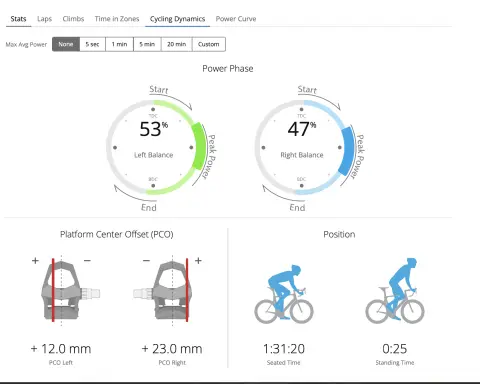
Cycling Dynamics from Power Pedals — How to Read the Data
L/R balance, Power Phase, and Platform Center Offset explained with real Favero Assioma Pro MX data from a Garmin Edge 840 and Garmin Connect.
 Training
Upper-Body Strength Training for Cyclists
Cycling heavily works the legs, leading to a strong lower body and a weaker upper one. Neglecting upper-body strength training is a mistake.
 Gear & maintenance
How Often to Lube Your Bike Chain
A well-lubed chain runs quiet, saves watts, and lasts thousands of km. A neglected one eats your cassette and chainrings. How often to lube, really.
 Nutrition & hydration
Cyclist Hydration — Electrolytes, Salt and Isotonic Drinks in Training
2% dehydration cuts output power by 7-10%. Plain water without electrolytes doesn't fix it. A concrete protocol for calculating and replacing losses.
 Training
Zone 2 Training: Why Riding Slower Makes You Faster
One of the most important rules in endurance training: to ride faster, you have to learn to ride slow. Zone 2 is the foundation all cycling form is built on.
 Data & metrics
TSB — How to Know From Your Data You're Ready to Race
"I feel good" isn't enough to know if you've hit peak form for race day. TSB gives a concrete, numerical answer — if you know what value to target.
 Gear & maintenance
How to Set Up Your Bike Saddle — Height, Setback, Angle
A badly set saddle means sore knees, numb glutes and lost watts. Three parameters decide everything: height, horizontal setback and angle.
 Health & recovery
Recovery After a Bike Ride — Sauna, Jacuzzi, Stretching
Form doesn't grow during training — it grows after it, during recovery. Sauna, jacuzzi and stretching can help, but only on top of sleep and nutrition.
 Training
Interval Training on the Bike — How to Start and What It Gives You
Interval training alternates effort and rest. It's the most effective way to build fitness and power fast, and also the easiest to botch.
 Data & metrics
Cycling Cadence — What It Is and What's Optimal
Cadence is how many times your crank turns per minute. "Spin faster" vs "push harder" is cycling's oldest debate — the truth is more nuanced.