 Health & recovery
Pollen Season and Cycling Training — How to Plan Rides Around Allergies
At the peak of pollen season, an allergic rider breathes through narrowed, irritated airways, which directly limits oxygen uptake at the same power.
 Training
Swollen Legs After Cycling — Causes and What to Do About It
Swollen calves and ankles after a ride usually come from prolonged sitting with restricted venous return, high sodium intake, or accumulated load.
 Health & recovery
Cycling and Heart Health — What Science Says
Cycling is one of the best sports for the heart. But "more is better" isn't the whole truth — intensity and regularity matter too.
 Nutrition & hydration
What to Eat on the Bike — Fuelling Long Training Rides and Tours
The sudden power drop, dizziness, legs turning to jelly — that's the famous "wall". It's easy to avoid with the right fuelling and hydration on the bike.
 Data & metrics
Is W/kg the Only Metric That Matters in Cycling?
W/kg rules on climbs, but on the flat absolute watts and aerodynamics decide, and in races — repeatability. When to look at what?
 Training
Swimming as Cross-Training for Cyclists — Why It's Worth Hitting the Pool
Cyclists get the best results when they add other activities. Swimming is one of the most effective forms of cross-training. A concrete plan to add it.
 Data & metrics
How to Climb Hills Faster on a Bike — Technique and Cadence
Climbs are the moment of truth on a bike. "Faster uphill" doesn't mean "push harder" — the key is pacing, cadence and position, not pure brute force.
 Health & recovery
Overtraining on the Bike — Symptoms and Prevention
More training means better results, up to a point. Past it, your body starts regressing instead of growing. Catching it early saves weeks of forced rest.
 Everyday riding
How to Become a Road Cyclist — A Beginner's Guide
Road cycling draws you in, but starting out is intimidating. The good news: you don't need the priciest gear or a training plan from day one.
 Data & metrics
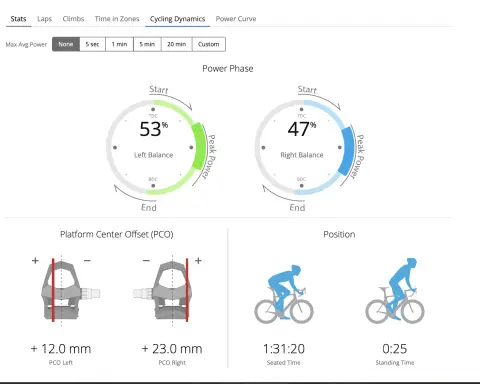
Cycling Dynamics from Power Pedals — How to Read the Data
L/R balance, Power Phase, and Platform Center Offset explained with real Favero Assioma Pro MX data from a Garmin Edge 840 and Garmin Connect.
 Training
Upper-Body Strength Training for Cyclists
Cycling heavily works the legs, leading to a strong lower body and a weaker upper one. Neglecting upper-body strength training is a mistake.
 Gear & maintenance
How Often to Lube Your Bike Chain
A well-lubed chain runs quiet, saves watts, and lasts thousands of km. A neglected one eats your cassette and chainrings. How often to lube, really.