How to protect your bike from theft — locks, chains and rules
A stolen bike is one of the most frustrating experiences for a cyclist. The right lock, the right technique, and a few habits can dramatically reduce your risk.
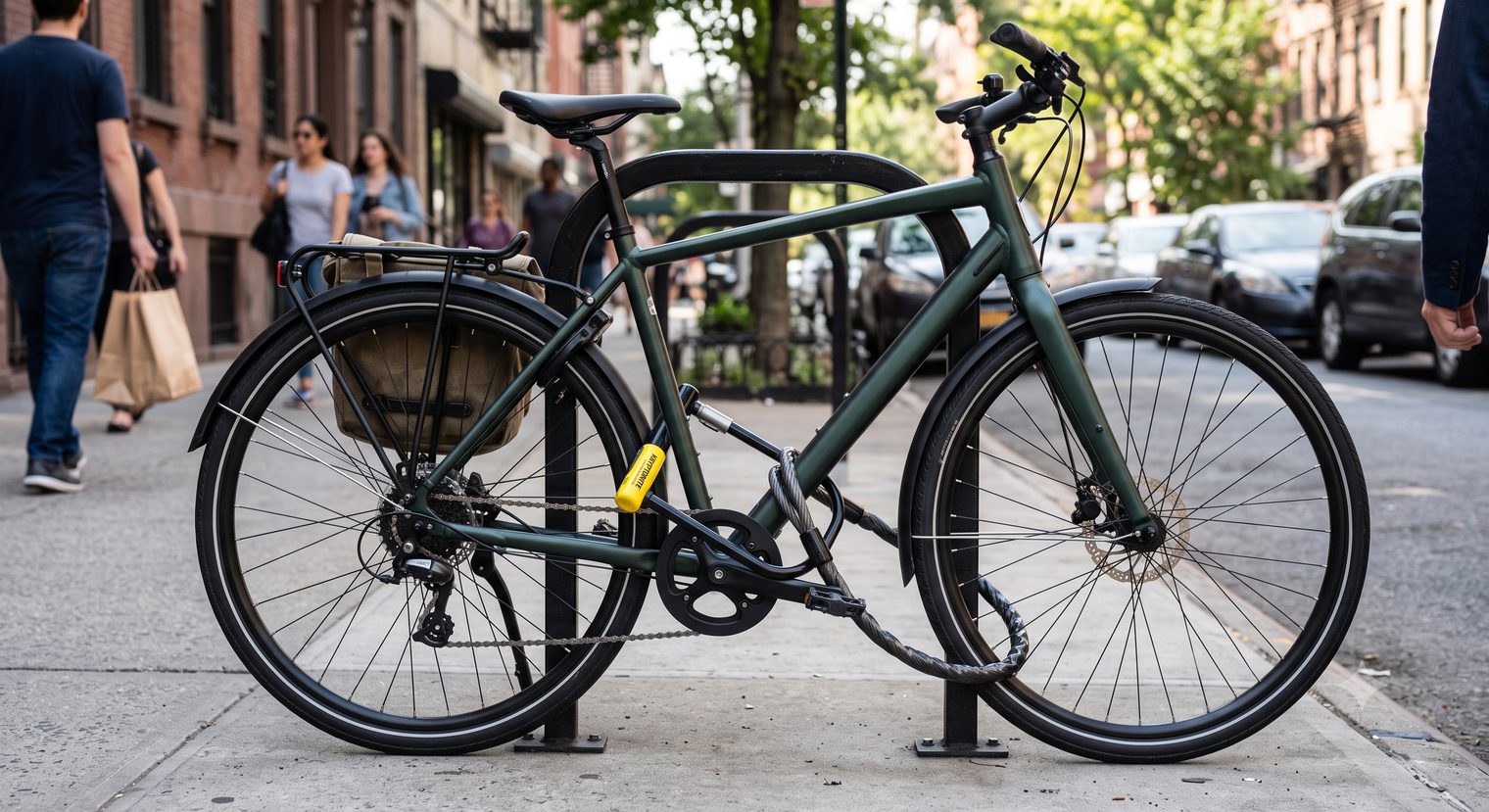
Types of bike locks
- U-locks (D-locks) — the gold standard for security. Hardened steel, resistant to bolt cutters. Heavier but very effective. Best for urban commuting.
- Chain locks — flexible, easy to wrap around poles and frames. Look for hardened steel chains with at least 8 mm links.
- Folding locks — compact and moderate security. A good compromise between weight and protection.
- Cable locks — lightweight but low security. Fine as a secondary lock for wheels, never as your only lock.
How to lock your bike properly
- Lock through the frame and rear wheel to a fixed, immovable object.
- If using a U-lock, fill the inside of the shackle — leave as little room as possible for a lever or jack attack.
- Use a secondary cable to secure the front wheel if it has a quick-release.
- Lock in a visible, well-lit, high-traffic area.
- Avoid locking to trees, thin poles, or anything that can be cut or lifted over.
Additional precautions
- Register your bike — note the serial number (found on the bottom bracket), take photos, and register with your local police database if available.
- Remove accessories — lights, GPS, saddle bags. Anything quick-release is easy to steal.
- Insurance — for expensive bikes, consider cycling-specific insurance. Standard home insurance often has low limits for bikes stolen outside the home.
- GPS trackers — hidden trackers (like AirTag in the seatpost) help with recovery but don't prevent theft.
Train smarter with WattLog.pro
WattLog.pro collects data from your trainer and shows what's really happening with your fitness.
Try WattLog.pro for free →