20 km Bike Commute to Work — Is It Doable and How to Prepare
20 km one way is 40 km a day. Sounds like a lot? On a bike that's 45–70 minutes of riding — many people spend that long stuck in traffic. The real question is whether you can sustain it daily.
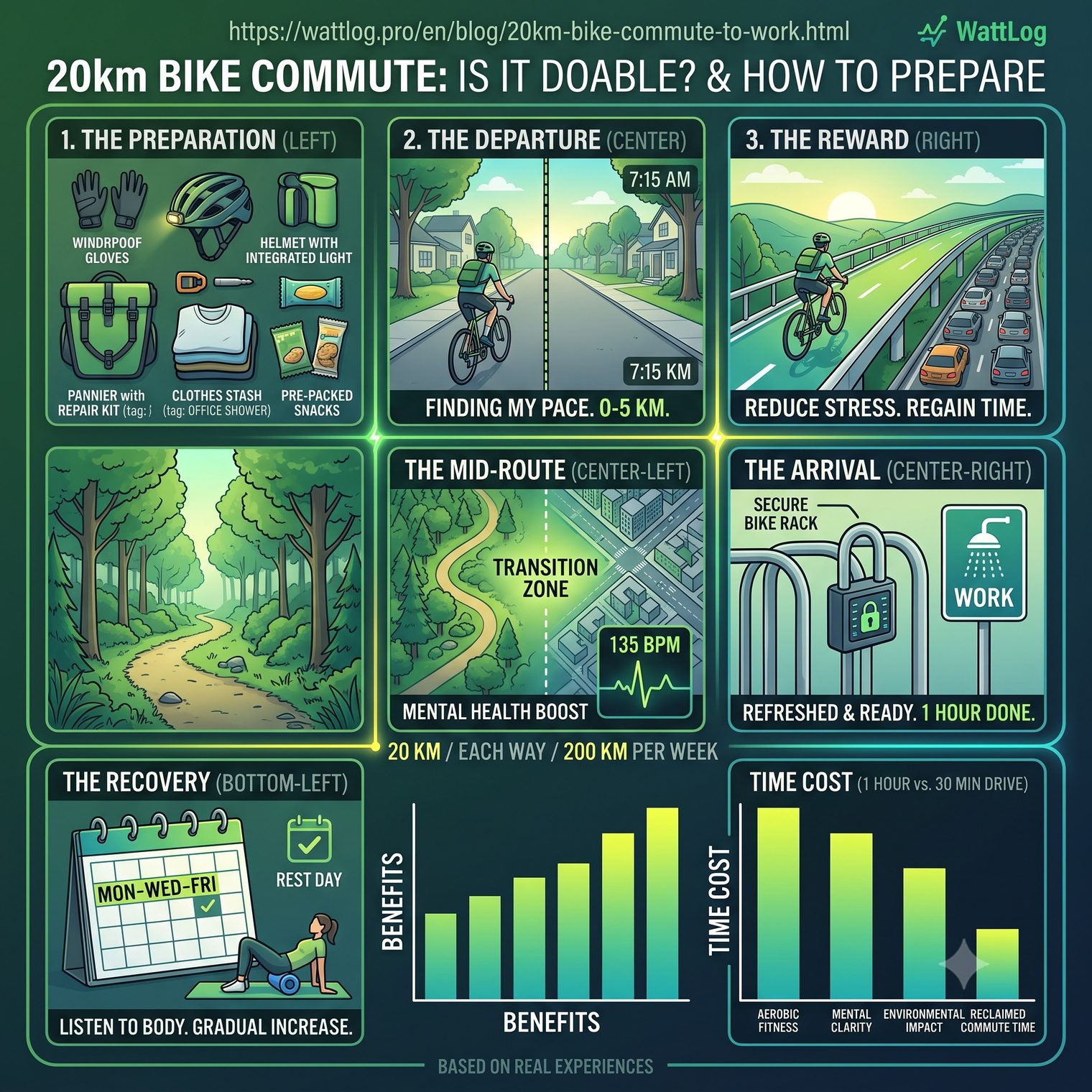
How long does 20 km actually take on a bike?
| Bike type | Average pace | Time for 20 km |
|---|---|---|
| City/hybrid bike | 15–18 km/h | 65–80 min |
| Road / gravel bike | 22–28 km/h | 43–55 min |
| E-bike | 25–30 km/h | 40–48 min |
On a road bike at a moderate pace, budget under an hour. Add 10 minutes to change at the office. Compare that to driving in rush hour — it's often a wash.
How to prepare
Do I need to ride every day when I start commuting?
No — start with 2–3 days a week. Your body needs to adapt not so much to the distance as to waking up earlier and sustaining regular effort day after day. After 2–3 weeks you can build up to 4–5 days.
Route
Scout your route on a weekend with no time pressure. Look for bike paths, side streets, and riverside trails. 20 km on a quiet route is a pleasure. 20 km in traffic is stress.
Gear
- Bike — a road or gravel bike is ideal for 20 km. A city bike works too, just slower.
- Panniers or a rack bag — a backpack on a 20 km commute means a soaked back. Invest in panniers.
- A change of clothes — leave a week's worth of work clothes at the office on Monday.
- Lights — in fall and winter you'll ride both ways in the dark. Good lights aren't optional.
Sweat and hygiene
How do you avoid showing up to work drenched in sweat?
A shower at work is the ideal fix — ask before assuming there isn't one. Without a shower, slow your pace (an easy tempo produces less sweat) and wipe down with body wipes once you arrive.
How much do you actually save?
40 km a day by car × 220 working days = 8,800 km a year. At typical fuel consumption and prices, that's a meaningful chunk of change in fuel alone — plus parking, depreciation, and insurance, the real annual savings usually land well into four figures.
Weather and winter
20 km in the rain is manageable with a good rain jacket and fenders. 20 km in freezing temperatures needs proper layering. The worst conditions are around 0–5°C with rain — that's when even committed commuters reach for a transit pass.
You don't need to ride every day in every condition. Three days a week, year-round, adds up to more weekly volume than a lot of "weekend warrior" cyclists log.
Train smarter with WattLog.pro
WattLog.pro collects data from your trainer and shows what's really happening with your fitness.
Try WattLog.pro for free →